Arts and Health Incubator Grant
Arts and Health Incubator Grant Guidelines
The Arts and Health Incubator Grant (AHG-INC), a one-time grant program, for FY '27 will fund organizations or artists for planning, professional development, capacity building, pilot projects, or coalition building that utilize the arts to address one of the Creating a Healthier Rhode Island priorities in the RI 2030 Health Plan: physical health and well-being, behavioral health, older adults and caregiving, healthcare system strengthening, and/or equity for underserved communities.
During the project period, grantees will participate in the Arts and Health Peer Learning Cohort. This group of artists, creatives, organization leaders, and health professionals will convene to share knowledge, challenges, best practices, and evaluation strategies.
A robust body of research links arts participation to these positive health outcomes, demonstrating that the arts can improve the social, emotional, physical, and psychological well-being of individuals while also addressing the social determinants of health: the non-medical factors that impact well-being. In addition, evidence shows that the arts enhance social cohesion and belonging, reducing the significant health risks posed by social isolation and loneliness. (Explaining-the-social-determinants-of-health)
Award Amount: Up to $7,000 for organizations; up to $5,000 for individuals.
Funds from the incubator grant may be used for the following:
- Planning
- Capacity building
- Professional development
- Pilot projects
- Evaluations
- Coalition building
Grant Program Goals:
- Innovative ideas that use the arts to address the RI 2030 Health Priorities.
- Stronger recognition of the arts as essential to health and well-being.
- Increased understanding of the role of the arts in supporting health outcomes.
- Expanded recognition of the arts as an integral component of health and well-being strategies.
- Deeper network and stronger connections between arts and health.
Who can apply
- Artists that live in Rhode Island. See details under “Eligibility for Individuals” section.
- 501(c)(3) nonprofit organizations based in Rhode Island. Eligible nonprofit organizations may include health-based, social service, community-based, or arts and cultural organizations.
- Groups fiscally sponsored by a 501(c)(3) nonprofit organization based in Rhode Island.
Timeline
- Grants open for applications on Feb. 1, 2026.
- Application grant support (virtual) & application (drop-in) office hours - Feb/Mar 2026.
- Deadline is on April 1, 2026, at 11:59 p.m.
- Funding period supports project occurring between July 1, 2026, and June 30, 2027, the State’s Fiscal Year.
- Grant notifications will be sent in mid-June (tentative).
- Grant Kickoff (Peer Learning Cohort) meeting – anticipated Sep 2026.
- Peer Learning Cohort (for grantee organizations/participating artists) (virtual) meetups – 2x.
- Final report is due the July 31, following the end of project period.
- Planning: A structured process for clarifying goals, identifying partners, defining scope, and designing activities that align arts practice with health, community, or public outcomes. In this work, planning emphasizes intentional design, cross-sector alignment, and readiness for implementation rather than abstract strategy.
- Capacity building: Activities that strengthen an organization or community’s ability to integrate, sustain, and scale arts-based approaches with health, public health, or social priorities. This may include developing skills, partnerships, infrastructure, or shared understanding necessary to support arts-integrated work over time.
- Professional development: Learning experiences that support artists, health professionals, and community partners in building the knowledge, skills, and shared language needed to work effectively at the intersection of arts, health, and community well-being. This includes opportunities that deepen practice, encourage collaboration, and support ethical, responsive engagement.
- Pilot projects: Time-limited, exploratory initiatives designed to test new ideas, partnerships, or approaches to integrating the arts into health or community contexts. Pilot projects emphasize learning, adaptation, and feasibility, generating insight that can inform future programs, policies, or scaled efforts.
- Evaluations: Structured processes for examining and understanding the outcomes, experiences, and impacts of arts-integrated work. In this context, evaluation may include qualitative and/or quantitative methods and is used primarily for learning, accountability, and improvement, rather than judgment or clinical validation.
- Coalition building: The intentional formation and strengthening of relationships among organizations, practitioners, and community stakeholders working across sectors. Coalition building in this work focuses on shared purpose, trust, and coordinated action to advance arts-integrated approaches to health and community well-being.
Project Value to the Community
Core to all funded programs is a connection and value to the community being engaged with by the public, fulfilling RISCA’s charge to facilitate a meaningful cultural life for all Rhode Island residents.
Per guidelines from the National Endowment for the Arts (NEA) and our agency, programs that engage underserved communities as defined by the NEA are particularly suitable for grants.
For individuals
You must:
- Be 18 years of age or older.
- Have lived in Rhode Island for at least one year at the time of application. This means Rhode Island is your primary residence, and is the address you use for legal forms, state income taxes, car registration, driver’s license or state issued identification, and voter registration – regardless of whether you own or rent your home. You must reside in the state for at least 183 days per year.
- Be a legal resident of the United States with a tax identification number (either Social Security number or an Individual Taxpayer Identification Number). This includes refugees, immigrants, and temporary residents. This does not include people in the country on a tourist visa.
You are ineligible, if you are:
- A staff or Council member of RISCA, or an immediate family member of a staff or Council member.
- Currently enrolled in an arts degree seeking program or attending high school full time.
- Proposing a project that is part of a nonprofit or other formal entity’s work. You can receive in-kind donations from formal entities (like donated rehearsal space or materials).
- Not the primary artistic force behind the project.
- Applying for support for this project or aspects of this project through another RISCA grant program.
- Delinquent on any final reports for previous RISCA grants.
For Organizations
You must agree to the following statements:
- This organization has a Unique Entity ID (UEI). If not, I will reach out to the RISCA program director for instructions on how to apply without a UEI.
- This project is not receiving direct funding from another RISCA grant.
- This organization is not applying for another RISCA grant at the same deadline.
- This organization is not requesting support for this project or aspects of this project through another RISCA grants program.
- This program occurs in spaces that are Americans with Disabilities Act (ADA) compliant. See the NEA’s Accessibility: Publications, Checklists, & Resources for more information.
- The funded portion of the project activity takes place in Rhode Island.
- This organization is not delinquent on any final reports for previous RISCA grants.
You must be a nonprofit organization
- Conducting business and be incorporated in the State of Rhode Island as a 501(c)(3) with tax exempt status from the Internal Revenue Service.
- Registered with the R.I. Secretary of State.
- Governed by a revolving board of directors, trustees or advisory board drawn from the community at large and shown to be actively involved in the governance of the organization.
- If not 501(c)(3) tax exempt, a Rhode Island-based organization using a Fiscal Sponsor* that fits the above requirements.
- To confirm nonprofit status with the state, visit R.I. Secretary of State’s online database.
Note: Divisions, branches, departments, programs, or other subunits of nonprofit corporations, colleges, or universities are ineligible to apply on their own. Applications may be submitted only by the parent corporation.
You still can be eligible if your organization is incorporated in a state outside of Rhode Island. For out of state organizations to be eligible, they must:
- Show their principal place of business is in Rhode Island.
- Be registered with the R.I. Secretary of State’s office.
- Produce programming predominantly in Rhode Island.
- Be governed by a revolving board of directors, trustees or advisory board drawn predominantly from the Rhode Island community.
Applying with a Fiscal Sponsor
- If not 501(c)(3) tax exempt, a Rhode Island-based organization can apply via a Fiscal Sponsor. A Fiscal Sponsor is an organization registered with R.I.’s Secretary of State Office and can accept a grant on your behalf. The Sponsor must be financially, administratively, and programmatically responsible for all conditions of the grant.
- Organizations interested in using a Fiscal Sponsor must contact the Arts and Health program director prior to beginning an application for approval and to request a grant profile that links the organization to the Fiscal Sponsor.
- Nonprofit organizations acting as Fiscal Sponsors can also apply for grants for their own programs or be awardees.
When submitting a grant via a Fiscal Sponsor, a letter of agreement between the applicant and the Fiscal Sponsor must be provided. Download the fiscal sponsorship letter template. Typically, Fiscal Sponsor will charge an administrative fee ranging from 0-10 percent depending on the degree of administrative support and bookkeeping required. This fee can be factored into your budget.
- Must fit RISCA’s definition of a nonprofit organization as stated above.
- Is responsible for signing any grant documents and ensuring that the sponsored organization follows the rules of the grant program and submits their final report.
- Cannot be a project partner in the sponsored organization’s application.
Note: If there is an organization that fits the agency’s definition of an eligible nonprofit involved in the project, they can function as the lead applicant.
- All grant awards are contingent upon the availability of funds from the Rhode Island General Assembly and the National Endowment for the Arts (NEA).
- The maximum grant award in this category is $7,000 for organizations and $5,000 for individuals - but partial awards are common. Partial awards will be no less than 50% of the application request or $1,000, whichever is higher.
- Grant applications are considered on a competitive basis. Award amounts may vary cycle to cycle depending on available funds, number of applications, and the panel decision-making. For more information on our Decision-Making Process, visit our Applicant Resources web page.
- If you receive a partial award, you may modify the project. Please reach out to staff to discuss project modifications at any time.
- You also have the option of declining the grant award with no penalties.
- If you receive a grant, you must credit the Agency on all marketing materials. See Acknowledging RISCA.
Grant funding cannot be used for the following:
- Capital improvement projects, like the construction or renovation of buildings or major permanent equipment purchases.
- Addressing, eliminating, or reducing existing debt or for contributions to an endowment fund.
- Development or fundraising, such as social events or benefits or any fundraising expenses.
- Entertainment and hospitality, including expenses for activities such as receptions, parties, galas, etc. Specific costs that have a core programmatic purpose and are included in your budget may be allowable.
- Prizes and awards for an event, person, and/or organization.
- Regranting the funds to other artists or organizations through an application or award process.
- Activities that are associated with a graduate or undergraduate degree program or for which academic credit is received.
- Applications for projects that proselytize or promote religious activities, or which take place as part of a religious service.
- Programming, performances, and exhibitions unavailable and/or inaccessible to the public. This includes programming that occurs in a space that does not comply with the Americans with Disabilities Act.
- Expenses incurred or activity happening outside of the award period.
Note: The Arts and Health Incubator Grant cannot fund clinical art activities, and the grant funds cannot be used for artists or health experts that are eligible for third party billing.
It is the policy of RISCA that no qualified individual, based on disability, shall be excluded from participation in or denied the benefits of services, programs, or activities of the agency or the agency’s grantees, or be subjected to discrimination.
For questions on accommodations, contact Seamus Hames, Arts Education Program Director and 504 Accessibility Coordinator, at 401-222-6994 or seamus.hames@arts.ri.gov.
For the Arts and Health Incubator Grant, RISCA will only accept applications for this grant through the online grant system Foundant. Please note there are two different Foundant grant portals along with a new state portal (eCivis/EUNA) required for the Arts and Health Grant.
To login or set up an applicant profile for the Arts and Health Incubator Grant, use this link: https://www.grantinterface.com/Home/Logon?urlkey=artsri
If you have questions about whether you or an organization already has a profile in the system or if you have questions about logging in, please contact the Arts and Health program director: Anisa.Raoof.INT@arts.ri.gov.
Application
Section 1: For RISCA staff to determine if the applicant meets the eligibility requirements to move to panel review. Includes an eligibility checklist and required uploads.
Section 2: For Panel to learn about the project and to review and score it based on the evaluation criteria. There are three parts.
- Logistics - simple questions, check boxes and uploads about the who, what, where, and when of the project. Includes project timeline and budget uploads.
- Artistic Vibrancy and Impact - three short narrative questions to explain how the art is central to the project, how this artist and/or art will provide a positive impact as measured by the indicated metrics, and how this project will provide access to or engage underserved communities as identified by the NEA.
- Program specific narrative question(s) and testimonial upload to demonstrate how this project aligns with the specific grant program. For the Arts and Health Incubator grant:
- Describe how the project utilizes the arts to address one or more of the following goals embedded in the RI2030 Plan's Health Priorities. Note: The “project” refers to the following: planning, capacity building, professional development, pilot project, evaluation, coalition building.
- These goals include: physical health & well-being, behavioral health, older adults & caregiving, healthcare system strengthening, and/or equity for underserved communities.
- Describe how the relevant health or community partners and artists are involved in the design and implementation of the project.
- Describe your plan to define and measure success.
Panel reviewers will use the following criteria to evaluate and recommend applications for funding.
Logistics.
- The application clearly states what will be done by whom, when and where things will take place, and how this project will happen both logistically and financially.
- The applicant indicates relevant metrics to measure their progress.
Artistic Vibrancy and Impact.
- Art is central to this project.
- The artist/artists will provide a positive and purposeful experience for the participants.
- This project provides access or engages underserved communities as identified by the NEA. Refer to the intended participants/audiences the applicant identified under "Logistics."
Health Benefit.
- The project utilizes the arts to address one or more of the following goals embedded in the RI2030 Plan's Health Priorities. Note: The “project” refers to the following: planning, capacity building, professional development, pilot project, evaluation, coalition building.
- These goals include: physical health & well-being, behavioral health, older adults & caregiving, healthcare system strengthening, and/or equity for underserved communities.
- Health and/or relevant community partner(s) and artists are integral to the design and implementation of the project.
- There is a clear plan to define and measure success.
Note: Per NEA enabling legislation, The NEA requires that state arts agencies include artistic merit and artistic excellence in their evaluative criteria. However, the NEA allows state arts agencies to define artistic merit and excellence for themselves and in conversation with their communities. For this grant program, artistic merit and artistic excellence is defined as “Artistic Vibrancy and Impact.”
For Staff review (for Organizations only):
Required Documentation for Determining Organization Applicant Eligibility
- 501(c)(3) IRS Determination Letter.
- Unique Entity Identifier (UEI). The UEI, a 12-character Unique Entity Identifier (UEI) assigned by the federal System for Awards Management (SAM), must be submitted by any entity receiving federal funds. Visit the SAM.GOV website to learn how to get a UEI for your organization.
- Recent 990 from one of your past three fiscal years. A 990 is the type of annual tax return 501(c)(3) nonprofits file. For nonprofits less than one-year-old who have yet to complete a 990 form, you will need to submit a Word Document indicating that you have not completed a 990 form.
- If you are using a Fiscal Sponsor, you need your Fiscal Sponsor’s 501(c)(3) Determination Letter, UEI, recent 990, and Fiscal Sponsor letter. Use the Fiscal Sponsor Template for your letter.
For Panel Review (for all Applicants):
Required Documents and Support Materials for Project Evaluation
- Project Budget (Required to use the RISCA Organization Budget Template).
- Project Plan (Required to use the RISCA Project Plan Template).
- Bio/CV/Resume of artist(s) involved.
- Bio/CV/Resume of health advisor / subject matter expert.
- Artistic Work Samples: Up to three work samples, showing how the artist(s) involved in the project have experience relevant to this project.
- This may include images, video, audio, and/or writing. Pieces of art include but are not limited to a short film; a graphic novel; a dance; a painting; a song; a sculpture; a performance in a public place; a poem; or a class/lesson/workshop the artist taught; or the work of the participants.
- Audio and video work samples may not exceed 10 minutes each (you may cut the file or provide timestamps). Written creative work samples may not exceed 20 pages.
- If the artist(s) for your project are not yet confirmed, you may upload work samples that demonstrate your organization’s past experience with and capacity to implement the proposed project. (e.g. Photos from past artist workshops, festivals, participants engaging in the arts experience.)
- Note: You must upload support materials to a Google Drive folder, open to everyone with the link or link and password.
- Work Sample List: Describe each work sample/example in 1-3 sentences of context about why you feel these work samples show how the artist(s) involved in the project have experience relevant to this project.
- Testimonial: This can be quotes, a short testimonial, or some other statement from a person or people who has experience with this program, organization, or the artist(s).
- Arts and Health is an umbrella term that refers to Arts in Health, Arts in Medicine, Arts in Healthcare.
- Arts in Health refers to the field dedicated to using the power of the arts to enhance health and well-being in diverse institutional and community contexts. (National Organization for Arts in Health).
- Arts in Public Health refers to professional artists practicing in collaboration with public health professionals or communities to enhance population health through wellness and prevention. This includes addressing the social determinants of health as well as the upstream drivers of health inequities. (Center for the Arts in Medicine, University of Florida).
- Arts in Healthcare is a multidisciplinary field dedicated to transforming the healthcare experience by connecting people with the arts and artists practices in the healthcare environment.
- Behavioral Health describes the connection between behaviors and the health and well-being of the body, mind, and spirit. Behavioral health looks at how behaviors impact someone’s health — physical and mental.
- Creative Therapies is the use of art forms to help treat certain health conditions. These therapies recognize the inherent connection between creativity and the human psyche, utilizing various creative modalities to address emotional, psychological, and physical challenges. Creative therapies encompass a range of practices, including art therapy, music therapy, dance/movement therapy, drama therapy, and poetry/writing therapy.
- Creative Arts Therapists are mental health or counseling professionals who "use distinct arts-based methods and creative processes for the purpose of ameliorating disability and illness and optimizing health and wellness" (NCCATA, 2020 - National Coalition of Creative Arts Therapies Associations, Inc.). Distinct difference from professional artists because of difference in qualifications and licensing/certification. Note: The Arts and Health Grant is not funding therapists in place of an artist.
- Health Professional is an individual who is trained and qualified to provide healthcare services to individuals, families, and communities. Health professionals include doctors, nurses, pharmacists, therapists, and others who work in various healthcare settings to promote, maintain, and restore people’s health and well-being. They are dedicated to diagnosing and treating illnesses, preventing diseases, and improving overall health outcomes.
- Health* is a state of complete physical, mental, and social well-being and not merely the absence of disease or infirmity.
- Loneliness is far more than just a bad feeling—it harms both individual and societal health. It is associated with a greater risk of cardiovascular disease, dementia, stroke, depression, anxiety, and premature death. The mortality impact of being socially disconnected is similar to that caused by smoking up to 15 cigarettes a day,4 and even greater than that associated with obesity and physical inactivity. And the harmful consequences of a society that lacks social connection can be felt in our schools, workplaces, and civic organizations, where performance, productivity, and engagement are diminished. (Our Epidemic of Loneliness and Isolation: The U.S. Surgeon General’s 2023 Advisory on the Healing Effects of Social Connection and Community)
- Non-clinical refers to participant/patient care supports that do not provide direct diagnosis, treatment, testing, or care for a patient.
- Nonprofit Organization: Is incorporated in and conducting business in the State of Rhode Island, with 501(c)(3) tax-exempt status from the Internal Revenue Service, registered with the Rhode Island Secretary of State, governed by a revolving board of directors, trustees or advisory board drawn from the community at large and shown to be actively involved in the governance of the organization.
- Participatory Arts engagement means the participants should be participating in the art making, not just observing a presentation of the art form by the teaching artist. Projects must be experiential and focus on the exploration of art and the artistic process.
- Public Health* refers to all organized measures (whether public or private) to prevent disease, promote health, and prolong life among the population. Its activities aim to provide conditions in which people can be healthy and focus on entire populations, not on individual patients or diseases.
- Rhode Island residency: Have been domiciled in Rhode Island for at least one year at the time of application. This means Rhode Island is your primary residence, and is the address you use for legal forms, state income taxes, car registration, driver’s license or state issued identification, and voter registration - regardless of whether you own or rent your home. You must reside in the state for at least 183 days per year.
- Social determinants of health (SDOH)* are the non-medical factors that influence health outcomes. They are the conditions in which people are born, grow, work, live, and age, and the wider set of forces and systems shaping the conditions of daily life. These forces and systems include economic policies and systems, development agendas, social norms, social policies, and political systems. The SDH have an important influence on health inequities - the unfair and avoidable differences in health status seen within and between countries.
- Social Prescribing is a process through which a person is referred (by a clinician or community worker) to non-medical, community-based resources or activities, which may involve nature, art, movement, and/or service.
- Underserved communities. The National Endowment for the Arts defines “underserved” communities as "ones in which individuals lack access to arts programs due to geography, economic conditions, ethnic background, or disability."
-
Unique Entity Identifier (UEI). The federal government requires all organization have a Unique Entity Identifier (UEI). You can apply for a free Unique Entity Identifier (UEI) at sam.gov.
*As defined by The World Health Organization
Are you ready to apply?
- Guidelines (pdf)
- Application Questions (pdf)
- Budget template (xlsl)
- Project Plan Template (xlsl)
- Evaluation Criteria and Scoring (pdf)
- Fiscal-Sponsor-Template-Letter (doc)
- Work Samples List Template (pdf)
Questions?
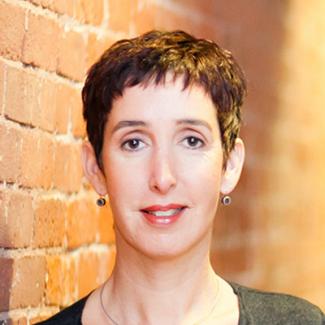
Anisa Raoof
Arts and Health Program Director/Grants Manager
401-222-1146
Read Anisa's bio
Make an appointment
Grant Support